Most herniated, slipped and bulging discs can be treated without surgery, and stem cell injection is the leading minimally invasive option: no incision, no general anaesthetic, and a fraction of the cost of an operation. Exercise and physiotherapy support recovery, and research shows many herniations shrink over months. Surgery is for emergencies and the few cases that do not respond. Send your MRI and a doctor tells you, free, whether stem cell treatment could fit your back.
Stem cell treatment vs disc surgery
| Disc surgery or fusion | Stem cell treatment | |
|---|---|---|
| Procedure | Incision, general anaesthetic, disc tissue removed or vertebrae fused | Image-guided injection, local anaesthetic, no incision |
| Hospital stay | Day case to several days | Walk out the same day |
| Recovery | Weeks for a microdiscectomy; months for fusion | Light activity within days |
| Typical cost | In the US, often $20,000 to $50,000 for disc surgery and $80,000 or more for fusion without insurance (Becker's Spine) | A fraction of the cost of surgery |
| Aim | Remove or fix the damaged part | Calm inflammation and support the disc's own repair |
Our partner clinic in Bangkok has treated more than 1,000 patients with regenerative medicine. A doctor reviews your MRI free and recommends the treatment that is right for you, which for many people is stem cell treatment instead of surgery. Get your free assessment.
Back or leg pain for more than 6 weeks? Get the free guide and a doctor review of your scan.
Do you need disc surgery?
Ask yourself three questions:
- Is it an emergency? Numbness around the groin or buttocks, new problems controlling bladder or bowels, or weakness in both legs: go to an emergency department now. See when disc surgery is needed.
- Is weakness getting worse? A foot that slaps or drags, or a hand that keeps losing grip, needs an urgent specialist review.
- Has non-surgical care had a fair chance? For most people, that means 6 to 12 weeks of active treatment.
If the answers are no, no and no, you probably have time to try other options first. Read do I need disc surgery?
What the research says
- A Dutch trial in the New England Journal of Medicine (Peul, 2007) found early surgery for sciatica gave faster leg-pain relief, but at one year results were similar to prolonged non-surgical care.
- The US SPORT trials found both surgical and non-surgical patients improved substantially.
- A 2015 review found disc herniations often shrink by themselves over time.
- UK NICE guidelines advise against spinal fusion for low back pain outside research trials.
Alternatives to disc surgery
| Option | What it aims to do | Evidence |
|---|---|---|
| Stem cell injectionRecommended | Support the damaged disc | Growing clinical evidence, including randomised trials |
| Physiotherapy and exercise | Strength, movement, confidence | Strong, first line |
| Sciatica exercises | Calm nerve pain, keep moving | Good |
| Epidural steroid injection | Reduce nerve inflammation | Short-term relief |
| PRP injection | Growth factors from your blood | Small trials |
Full details with sources: evidence table.
Back or leg pain for more than 6 weeks? Get the free guide and a doctor review of your scan.
Find your problem
- Herniated disc and slipped disc
- Bulging disc and ruptured disc
- Sciatica and spinal stenosis
- Neck disc herniation and degenerative disc disease
Told you need surgery?
Before agreeing to an operation, ask what happens if you wait, which non-surgical options you have not tried, and whether injections such as PRP or stem cells could fit your MRI. A free second look at your scan helps: send your MRI for a doctor review.
Coming from abroad? See regenerative back treatment in Bangkok.
How your spine and discs work
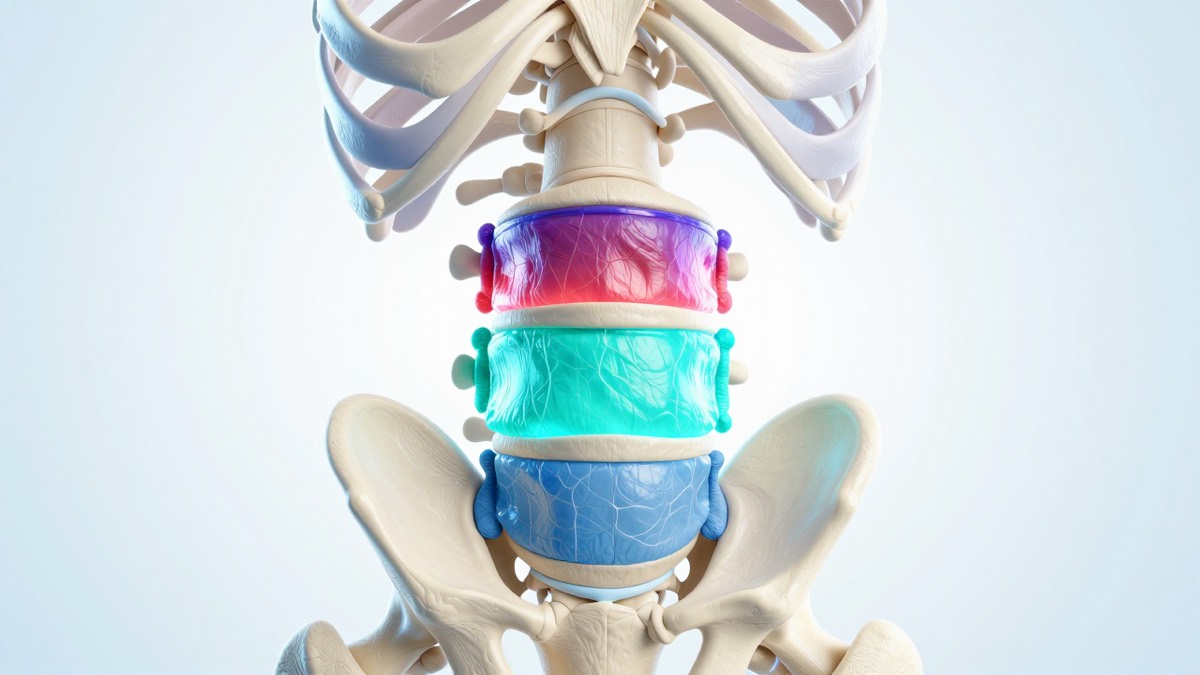
Your spine is a stack of 33 bones (vertebrae) with a spinal disc between most of them. Each disc has two parts: a tough outer ring (the annulus fibrosus) and a soft, gel-like centre (the nucleus pulposus). Together they work like a shock absorber, letting you bend, twist and carry load. Behind the discs, the spinal canal protects the spinal cord, and pairs of nerve roots leave the spine at every level to supply your arms, legs and organs.
Discs have very little blood supply. They live on nutrients that diffuse in from the bone above and below, which is one reason they age early and heal slowly. From our twenties onward, discs gradually lose water and height. Most of the time this causes no symptoms at all: studies of people without back pain regularly find bulges and disc wear on MRI.
Why discs herniate
A herniation happens when part of the soft centre pushes through a weak spot in the outer ring. It can follow a heavy lift, a twist or a fall, but often there is no single moment: years of small strains weaken the ring until one ordinary movement is enough. The two lowest discs in the lower back, L4-L5 and L5-S1, carry the most load and are the most common levels. In the neck, C5-C6 and C6-C7 are the usual suspects.
Pain comes from two things: pressure on a nerve root, and chemical irritation. The disc centre contains inflammatory substances, and when they leak onto a nerve they can cause intense pain even when pressure is small. That is why anti-inflammatory approaches and time help so many people, and why pain can be severe at first and then settle.
Symptoms that point to a disc problem
- Leg pain worse than back pain, running below the knee: typical of a lumbar disc pressing on a nerve root (sciatica)
- Arm pain, numbness or tingling into the hand: typical of a neck disc
- Pain that is worse when sitting, coughing or sneezing
- Numbness or pins and needles in a specific strip of skin
- Weakness in a specific movement, such as lifting the foot or gripping
Back pain alone, without leg symptoms, is more often muscular or joint-related than a disc pressing on a nerve.
Why surgery is often offered, and why you may have time
Surgeons see patients at their worst moment, when pain is severe and sleep is broken. A microdiscectomy can relieve leg pain quickly, and for the right patient it is a good operation. But the research is clear that, outside emergencies, waiting and treating actively is usually safe. In the Dutch sciatica trial, people who had early surgery recovered faster, yet at one year the two groups were doing about equally well. The US SPORT trials found the same pattern: both groups improved a lot.
That gives most people a window of 6 to 12 weeks to try other options without losing the chance of surgery later. The exceptions are the red flags on this page: bladder or bowel changes, saddle numbness and worsening weakness.
The non-surgical ladder, step by step
- Days 1 to 14: keep moving with short, frequent walks; avoid long bed rest and long sitting; use heat and pain relief that is safe for you.
- Weeks 2 to 6: start a structured exercise or physiotherapy programme, including sciatica exercises that centralise pain.
- Weeks 4 to 8: if leg pain is still severe, ask about an epidural steroid injection to calm the nerve so you can keep rehab going.
- Weeks 8 to 12: review progress. If you are improving, keep going. If not, get an MRI and a specialist opinion.
- After 3 months: for persistent disc pain, discuss PRP or stem cell injections, or surgery, based on what the MRI shows.
- At any point: red flags mean urgent care, not waiting.
What regenerative treatment is trying to do
Regenerative medicine aims to change the environment inside a damaged disc rather than cut it out. As discs degenerate, the number of healthy disc cells falls, inflammation rises and the disc loses its ability to hold water. Mesenchymal stem cells release signalling molecules that can calm inflammation and support the remaining disc cells. PRP delivers concentrated growth factors from your own blood.
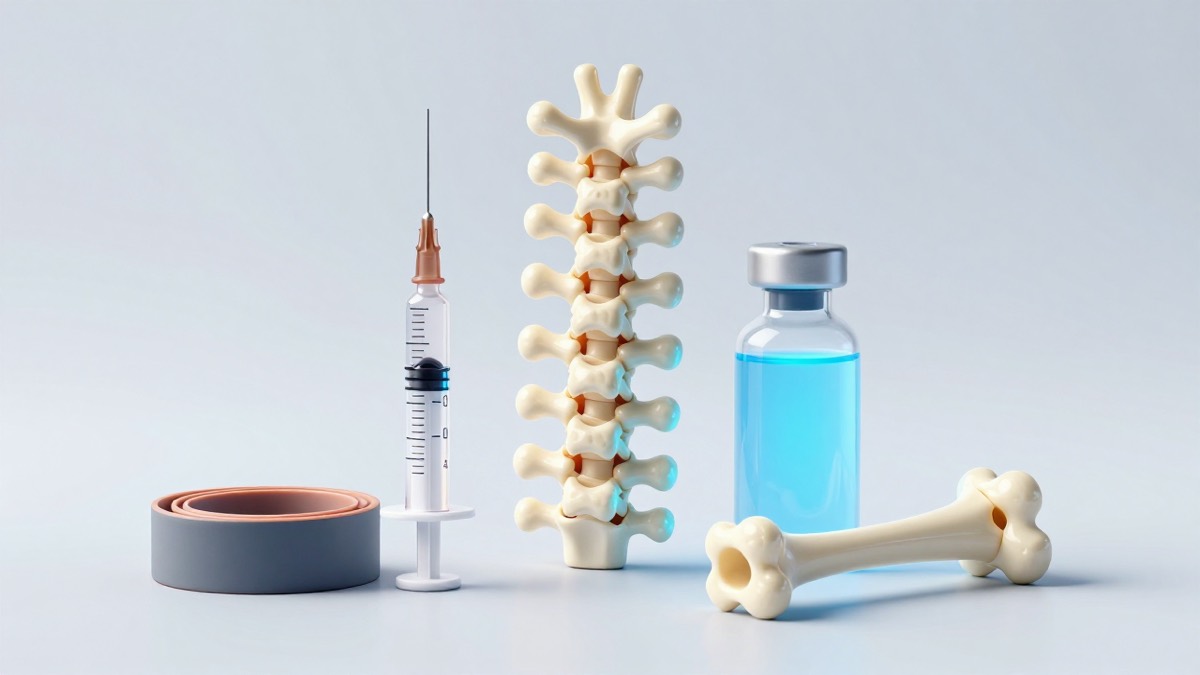
In practice, treatment is an image-guided injection into the disc or the nearby joints, usually as a day procedure. Most people walk out the same day, rest for a few days and then follow a gentle rehab plan. Effects, when they come, build over weeks to months rather than overnight.
Studies so far, including trials from China, Iran, Korea, Japan and Spain summarised on our stem cell page, report less pain and better function in many patients with degenerative or contained disc problems. Not every trial is positive, and treatment is not suitable for large free fragments, instability or emergencies. That is why a doctor reviews your MRI first.
Questions to ask any clinic
- What exactly is being injected: PRP, your own cells, or donor cells? How many?
- Is the injection guided by X-ray or ultrasound?
- Which disc problems do you not treat?
- What results do you track, and over what period?
- What happens if it does not help?
- Will you share my MRI review with my own doctor?
Living with a disc problem day to day
- Sitting: get up every 30 minutes; a small cushion behind the low back helps many people.
- Lifting: bend at the hips and knees, keep loads close, avoid lifting and twisting together.
- Sleep: on your side with a pillow between the knees, or on your back with a pillow under them.
- Work: many people can stay at work with adjustments; staying active speeds recovery.
- Sport: return gradually; walking, swimming and cycling are usually tolerated early.
Travelling for treatment
Many readers live where regenerative disc treatment is not available, not covered, or comes with a long wait. Bangkok is one of Asia's main medical-travel hubs, with direct flights from Australia, Europe, the Middle East and across Asia. A typical trip is 5 to 7 days: a consultation and imaging check, the procedure, a few days of rest, and a rehab plan to continue at home. Before anyone books anything, a doctor reviews your MRI and tells you honestly whether treatment could fit, or whether you are better served by physiotherapy, an epidural or surgery at home. Read the guide for your country: Australia, UK, USA, Canada, New Zealand, Singapore, UAE and Hong Kong.